Trip to Kornati Croatian National Park

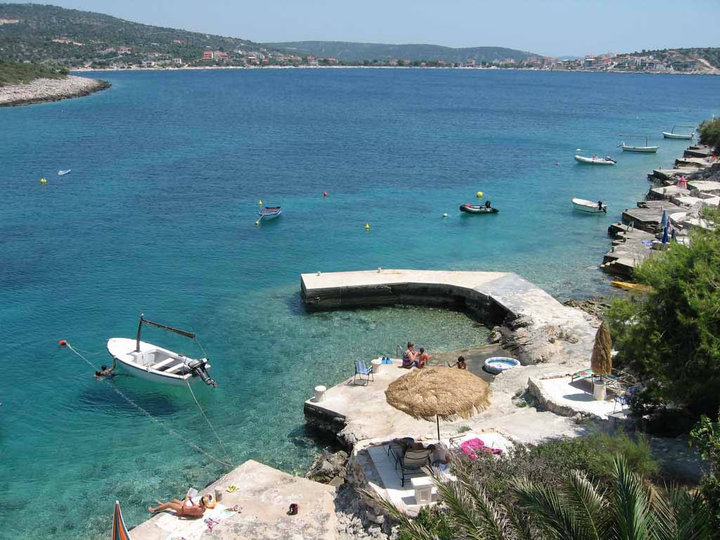
     It was very beautiful by boat, simply make the reservations at Primosten, or Rogoznica. As you go on the trip, the captain will inform you of what great history the Croatian Mediterranean holds, pretty interesting history. Make sure, you bring the whole family with you---it is very beautiful. The Kornati (pronounced [kɔ̝rnǎːti]) archipelago of Croatia, also known as the Stomorski islands, is located in the northern part of Dalmatia, south from Zadar and west from Šibenik, in the Šibenik-Knin county. With 35 kilometres (22 miles) length and 140 islands, some large, some small, in a sea area of about 320 square kilometres (124 sq mi), the Kornati are the densest archipelago in the Mediterranean Sea. Be the nearest to the Adriatic Sea.[1]From Northwest to south-east (from the island of Balabra to Samograd), and from north-east to south-west (from Gangarol to Mana) they stretch for 13 km (8 miles). The name of the archipelago is the plural form of the name of the largest island, called Kornati. Discover the ancient ruins of the war. 
A Tapestry of Water and Stone: Journeys Through Krka and KornatiA trip to the Dalmatian coast of Croatia offers a wealth of historical and natural wonders, but a journey into its two contrasting national parks, Krka and Kornati, provides a profound understanding of the region's soul. To visit these parks in succession is to experience a study in elemental opposites: one a lush, vibrant sanctuary of freshwater and life, the other a stark, majestic archipelago of stone and sea. Together, they form a complete narrative of the Croatian landscape, one written in flowing rivers and the other etched in sun-bleached rock.Our journey began inland, at Krka National Park, a realm where water is the undisputed architect and lifeblood. The journey to the park’s most famous feature, Skradinski Buk, builds anticipation through a series of wooden walkways that snake gracefully over crystal-clear streams and smaller cascades. The sound is the first thing that captivates you—a distant, growing roar that promises power and spectacle. Then, you see it: a massive, terraced series of seventeen travertine waterfalls, cascading over natural barriers in a thunderous display of raw energy. The water, a mesmerizing shade of turquoise and emerald, froths and tumbles into pools below, creating a permanent mist that cools the air and refracts the sunlight into miniature rainbows.The boardwalks allow you to walk directly over the rushing water, offering ever-changing perspectives of the falls. Below, the pools teem with life. Fish dart through the clear depths, and the air is thick with the buzz of insects and the songs of countless birds. The lush, almost tropical vegetation, including ferns and mosses clinging to the damp travertine, completes the picture of a fertile, living ecosystem. It is a landscape that feels generous and approachable. The opportunity to swim in designated areas near the falls, an experience now protected for the park's preservation, was once a highlight, allowing visitors to become one with the landscape, feeling the cool, powerful water against their skin. Krka is a park that engages all the senses—it is the sound of crashing water, the sight of impossible blues and greens, the smell of wet stone and damp earth. It is a celebration of abundance, a place where water tirelessly sculpts the land and sustains an explosion of life.The following day, we embarked on a boat from a coastal town like Biograd or Zadar, heading towards the Kornati Archipelago. The transition from Krka’s verdant embrace to Kornati’s stark reality is jarring and profound. As the mainland receded, the world seemed to simplify into three elemental components: the deep blue of the sea, the brilliant white of the sun, and the barren, greyish-white of stone. Kornati is not a single island but a dense mosaic of 89 islands, islets, and reefs, often described as a "nautical labyrinth." From the deck of the boat, the landscape appears almost lunar. The islands are largely barren, devoid of surface streams or rich soil, sculpted by the Bura wind and millennia of sun into dramatic, karstic formations.Where Krka is a symphony of sound, Kornati is a sanctuary of silence, broken only by the lapping of waves against the hull and the cry of a distant gull. The beauty here is not one of lushness, but of stark geometry and breathtaking vistas. The most striking feature is the dramatic cliffs, known as "crowns" (krune), which fall vertically into the deep blue channel. These white rock faces, some over 100 meters high, stand as silent, majestic guardians of the islands. The human history here is one of resilience. Scattered across the islands are the ruins of Illyrian forts and Roman villas, but most poignant are the dry-stone walls, painstakingly built by generations of farmers to carve small, fertile plots out of the rock. These walls crisscross the landscape like ancient scripts, telling a story of a hard-won existence.The true magic of Kornati, however, lies beneath the surface of the sea. While the land appears barren, the surrounding waters are a vibrant marine national park. Donning a mask and snorkel, I plunged into a world of stunning contrast to the desolation above. The water was incredibly clear, revealing a submarine garden of seagrass, colorful sponges, sea urchins, and schools of silvery fish darting among the rocks. This rich aquatic life is what has sustained people here for centuries and what now forms the heart of the park’s ecological value.In conclusion, a journey to both Krka and Kornati National Parks is a journey through the dual heart of Dalmatia. Krka, with its thunderous waterfalls and emerald pools, represents the land’s fertile, life-giving power. It is a dynamic, sensory-rich environment where nature’ abundance is on full display. Kornati, in its stark, silent majesty, represents a hardened beauty forged by sea, wind, and sun. It is a landscape that speaks of endurance, both of the natural world and the human spirit. One park is a celebration of water’s creative force, the other a monument to stone’s enduring presence. To experience both is to understand that Croatia’s true beauty lies not in a single note, but in the profound and beautiful harmony of its contrasts. By- Andrew Milan Bosnjak
Undefined